 Legal
Legal AI Citation Checking: Clearbrief vs CoCounsel vs Custom
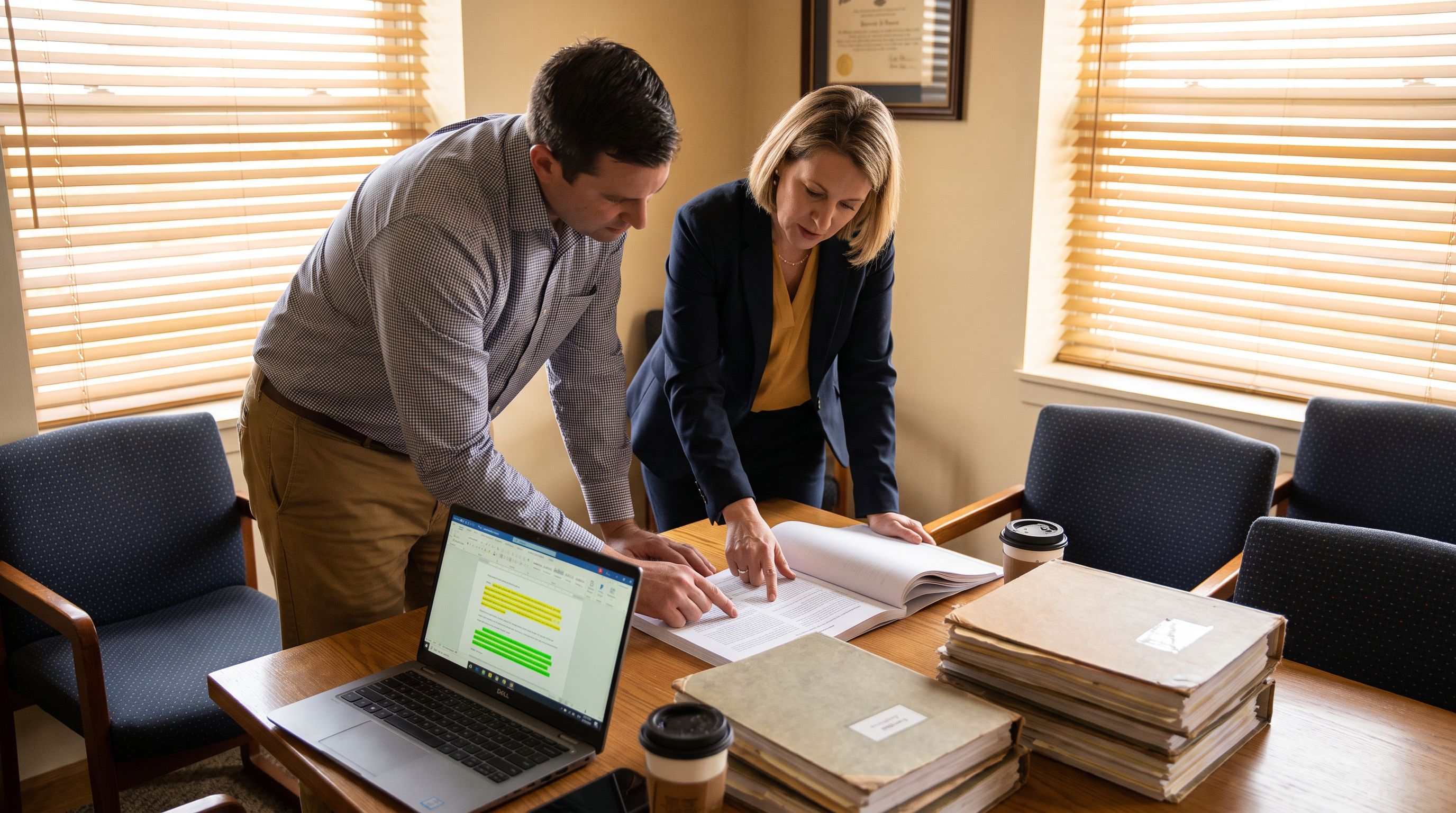
The failure mode everyone now knows by name
The failure mode that shows up in every AI-and-law conversation isn’t privacy or job loss — it’s fabricated citations. In Mata v. Avianca, Inc. (S.D.N.Y. 2023), Judge P. Kevin Castel sanctioned lawyers who filed a brief containing case citations generated by ChatGPT that did not exist. Since then, many judges have issued standing orders or individual rules about generative AI in filings — check your specific judge’s rules, because they vary and change.
The ABA’s Formal Opinion 512 (July 2024) on generative AI addresses competence, confidentiality, communication, and fees, and reinforces what Model Rule 1.1 Comment 8 already implies: you are responsible for the output, regardless of the tool. Federal Rule of Civil Procedure 11 does not have an AI exception.
So the interesting question for a small firm isn’t “should we use AI to draft?” It’s: what verification layer sits between the draft and the filing, and how much of it can an agent run?
What a citation-checking agent actually does
Strip the marketing away and “AI citation checking” is four distinct jobs that get bundled together:
- Existence — does this case, statute, or docket entry exist as cited?
- Treatment — is it still good law? Overruled, superseded, distinguished?
- Support — does the cited source actually say what the sentence claims it says, at that pin cite?
- Record accuracy — does the factual assertion match the deposition page, exhibit, or medical record cited, and is the quote verbatim?
Jobs 1 and 2 are database questions. They belong to licensed citators — KeyCite (Westlaw) and Shepard’s (Lexis) — and no general-purpose AI assistant replaces them. Jobs 3 and 4 are reading-comprehension-and-comparison tasks against documents you already possess. That is where an AI agent earns its keep.
The three realistic options
Clearbrief is a Word add-in built around the record-support problem: it links assertions in your draft to the underlying evidence and flags statements that appear unsupported, and it works inside the drafting environment lawyers actually use. Its natural home is litigation with a heavy record — summary judgment motions, oppositions, appellate briefs where every fact needs a cite.
Platform AI inside your research suite. Before you scope anything custom, check what your current subscription already includes. Westlaw’s Quick Check, Lexis’s Brief Analysis, and Bloomberg Law’s Brief Analyzer are all brief-analysis features that ingest a draft and report back on cited authority and quote support, sitting directly next to the citator you already pay for. CoCounsel (Thomson Reuters) and Lexis+ AI layer assistant-style workflows on top. The advantage is integration and authoritative treatment checking; the disadvantage is that you’re buying into that platform’s view of your work, with seat-based, negotiated pricing. Run a real brief through whichever of these you already license before you assume you need to build. Confirm current feature sets in the vendors’ own documentation — this category changes quarterly.
A custom cite-check agent connects an assistant like Claude to your document management system and matter files through MCP (the Model Context Protocol, an open standard for giving an AI governed access to your data and tools). It reads the draft, extracts every assertion-plus-citation pair, pulls the referenced page from your own PDFs, and reports mismatches. It does not touch Westlaw or Lexis — and it shouldn’t, because automated access to those services is restricted by subscriber terms. Verify your own license terms before pointing any automation at a paid database.
Building the record-side checker as a skill
The cleanest way to package this is as a skill — reusable, packaged instructions that teach an assistant to do one job the same way every time, rather than relying on whoever writes the prompt that day.
-
Clear the confidentiality question before any file moves
Deposition transcripts, exhibits, and produced documents are exactly the material ABA Formal Opinion 512 flags under the confidentiality duty. Read the vendor’s terms on data retention and model training, check whether a protective order in the matter restricts disclosure to third-party processors, and decide whether client consent or notice is required. Your state bar may have its own opinion on point; confirm the answer with your ethics counsel rather than assuming the enterprise tier solves it. -
Define the check precisely
Write the rule set a senior associate would apply: every factual assertion needs a record cite; every quote must match verbatim including ellipses; pin cites must point to the page containing the language; string cites follow your local format. -
Give the agent read access to the right files
Via MCP, expose the matter’s document set — depositions, exhibits, produced documents — from your DMS. Read-only. Scoped to the matter. See asking your matter files with a custom MCP server for the access-control pattern. -
Force an itemized output, not a verdict
The agent should return a table: assertion, citation, exact text found at that location, match / partial / not found. Never a global “looks good.” Itemized output is reviewable; a summary is not. -
Route case-law treatment to the citator
Have the agent produce a clean list of every authority cited, formatted for a human to run through KeyCite or Shepard’s. Automating the extraction is safe; automating the legal conclusion is not. -
Keep a signing human at the end
One named person reviews the exception list and signs. Log what the agent checked — some judges have adopted certification requirements about AI use, so check your judge’s standing orders and keep a record that matches what they ask for.
An agent that flags forty citations for human review is more valuable than one that confidently approves forty-one.
Where these tools break
Be realistic about the failure modes. Agents struggle with poor OCR — scanned exhibits with bad text layers produce false “not found” results and occasionally false matches. This is the most common cause of bad output, and it has a concrete fix: run an OCR-quality pass over the exhibit set first, score each document, and route anything below your confidence threshold to a manual reviewer instead of letting the agent silently report “not found.”
They also struggle with paraphrase: a brief says the witness “conceded liability,” the transcript says something more equivocal, and judging whether that’s fair characterization is legal judgment, not string matching. They struggle with implicit cites — the assertion three sentences later relying on the same source. And they are worst exactly where you most need them: on the close calls.
They are genuinely good at verbatim quote comparison, pin-cite page verification, detecting assertions with no supporting record reference at all, and format consistency. That’s a meaningful slice of the work.
Modeling the value without making up numbers
We have no benchmark data on time saved, and you should distrust anyone who quotes you one. Model it yourself:
(hours a paralegal or associate spends cite-checking a typical filing) × (filings per month) × (loaded hourly cost) = current spend. Then estimate what share of those hours are mechanical verbatim comparison versus judgment — that share is the realistic automation target, not the whole number.
Then add the two things spreadsheets miss: the reallocation value (recovered hours going to billable work, if you actually have demand to fill them) and the tail risk avoided (one sanctioned filing, one malpractice exposure, one client relationship). Our law firm automation ROI approach walks the full structure.
The short version of the split:
- Model recovered time as hours × rate, using your own inputs — never a vendor’s published claim.
- Buy the law side. Treatment and existence checks stay with KeyCite or Shepard’s.
- Consider building the record side. Quote accuracy and pin-cite verification run against files you already own.
How to decide
If you file occasionally and your records are thin, a Word add-in or your existing platform’s brief-analysis feature is almost certainly enough — and no AI at all beats badly-supervised AI. If you file the same motion type repeatedly against large records (PI, employment, insurance defense), a custom skill running over your matter files will fit your conventions in a way generic tooling won’t. Most firms end up with both: licensed citator for the law, custom or off-the-shelf agent for the record, and a human name on the signature line.
As of 2026, this category is moving fast enough that any specific feature claim deserves a check against current vendor documentation before you sign.
Where is your firm losing billable hours?
Get a free automation audit: we map your intake-to-invoice workflow and show you exactly what's worth automating — before you spend a dollar.
Get a free automation auditRelated guides

AI Dictation for Lawyers: Dragon vs Word vs Custom Agent
Compare Dragon legal dictation, built-in Word/Microsoft 365 dictation, and a custom AI agent that turns dictation into filed drafts, time entries, and tasks.
Read guide →
Medical Records Retrieval: Services vs a Custom AI Agent
Compare outsourced medical records retrieval services, paralegal-run processes, and a custom AI agent — with an honest look at where agentic law firm automation fits.
Read guide →
Docket Monitoring: Docket Alarm vs CourtListener vs Agent
Compare docket monitoring options for small law firms: Docket Alarm, PacerPro, free CourtListener alerts, and a custom AI agent that triages filings.
Read guide →